A hobby hardware project · 2020–2021
A homebrew GPU, built from logic chips
It started as a copy of Ben Eater's breadboard VGA card during the 2020 lockdown. A year later it was a tile-based graphics card with 256 colours and hardware scrolling, on its own PCBs, driven by a 6502 computer.
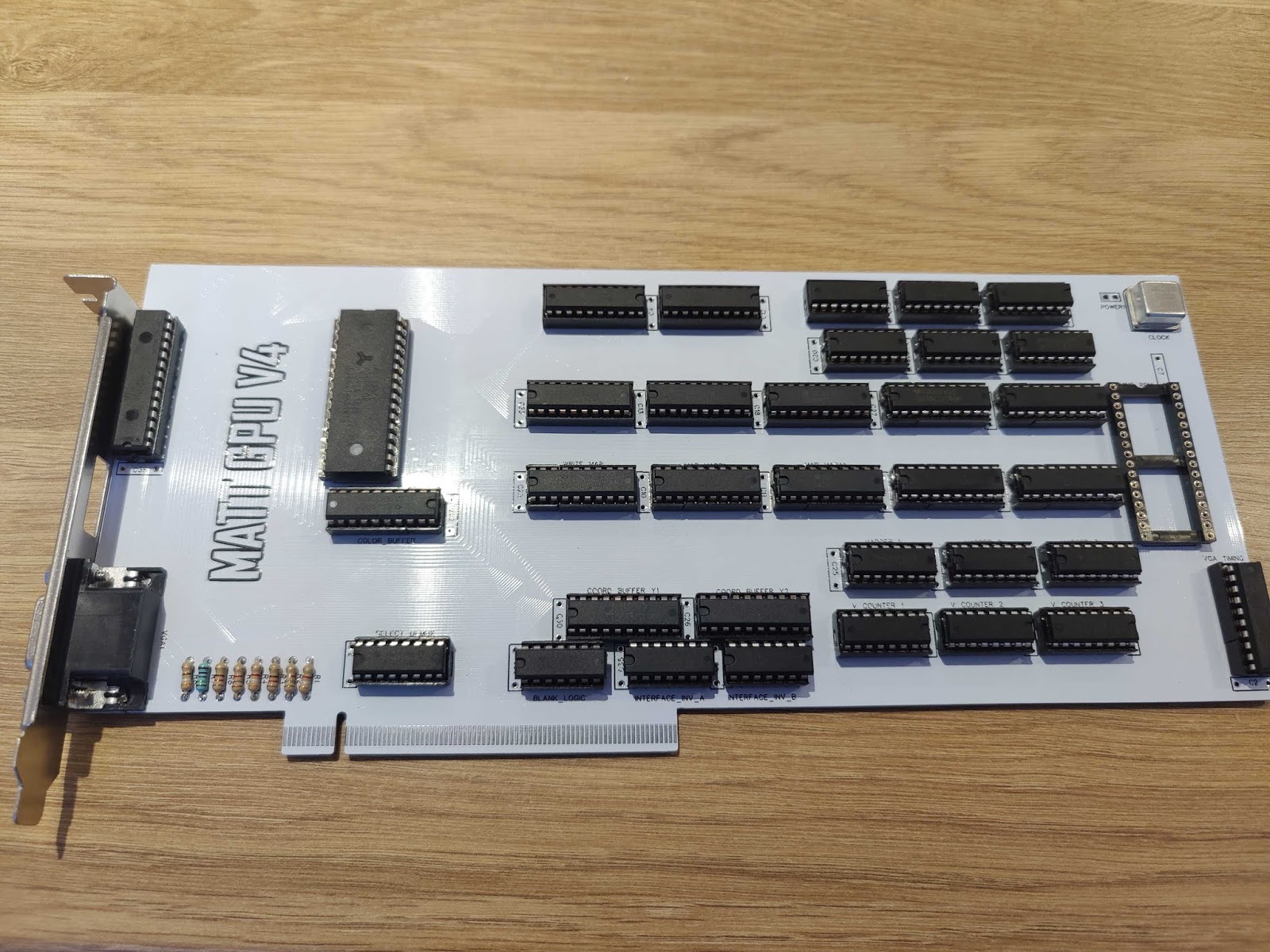
The finished GPU
- Resolution
- 400 × 300
- Colours
- 256 (8-bit RRRGGGBB)
- Tiles
- 256 tiles of 16 × 16 pixels
- Tile map
- 256 × 128 tiles (4096 × 2048 px)
- Scrolling
- Hardware, 12-bit X and Y
- Clock
- 20 MHz
- Output
- VGA, 800 × 600 @ 60 Hz
- Interface
- 8 data + 5 control lines
The build, in five parts
-
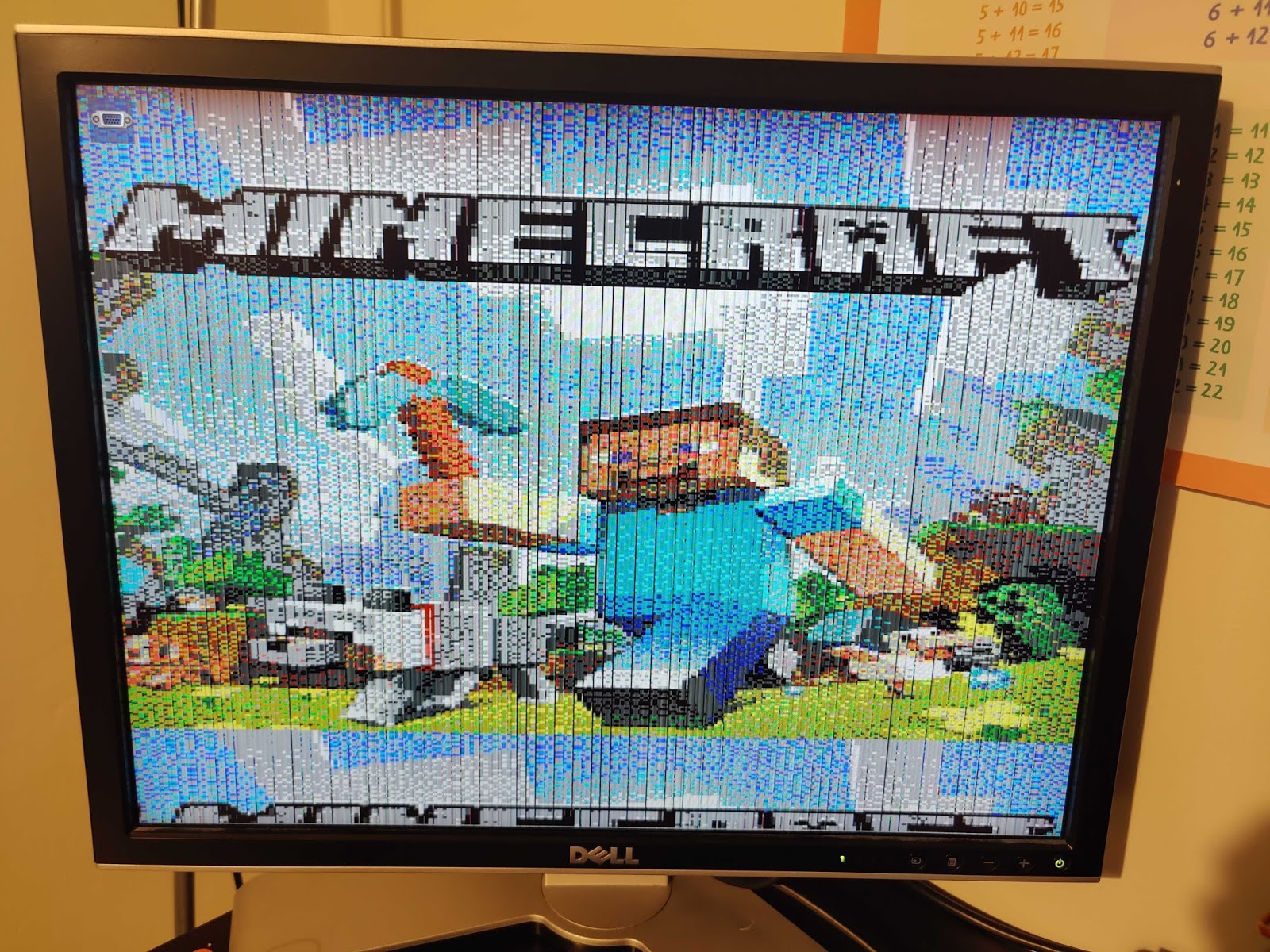 Building the video card
Rebuilding Ben Eater's VGA card on breadboards at twice the clock speed, trimming the sync logic, getting 16 colours out of an EEPROM, and ordering a first PCB.
Building the video card
Rebuilding Ben Eater's VGA card on breadboards at twice the clock speed, trimming the sync logic, getting 16 colours out of an EEPROM, and ordering a first PCB.
-
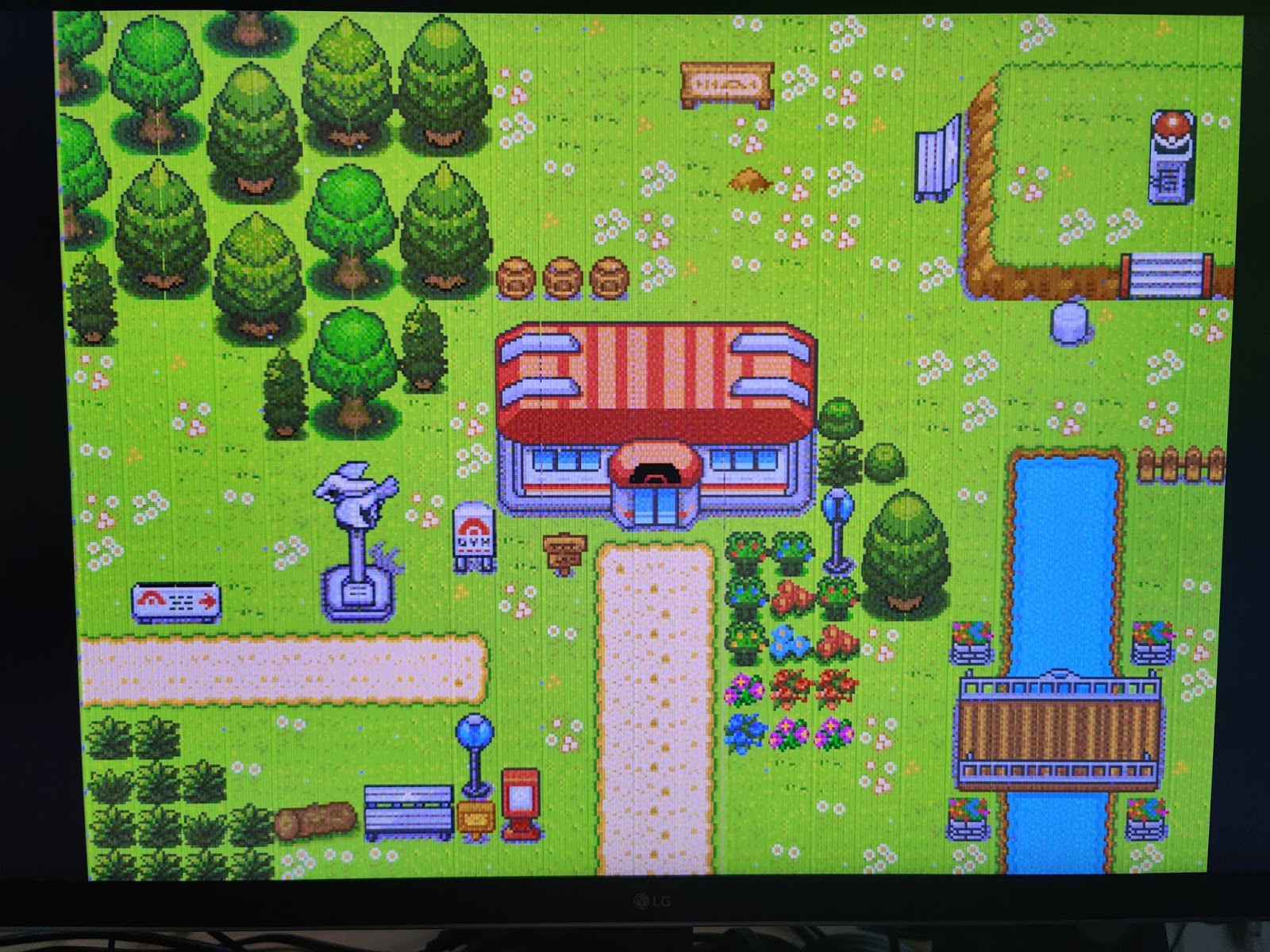 From video card to GPU
Game Boy–style tiles and a tile map, 256 colours, RAM instead of EEPROM, and an interface so another computer can draw to the screen.
From video card to GPU
Game Boy–style tiles and a tile map, 256 colours, RAM instead of EEPROM, and an interface so another computer can draw to the screen.
-
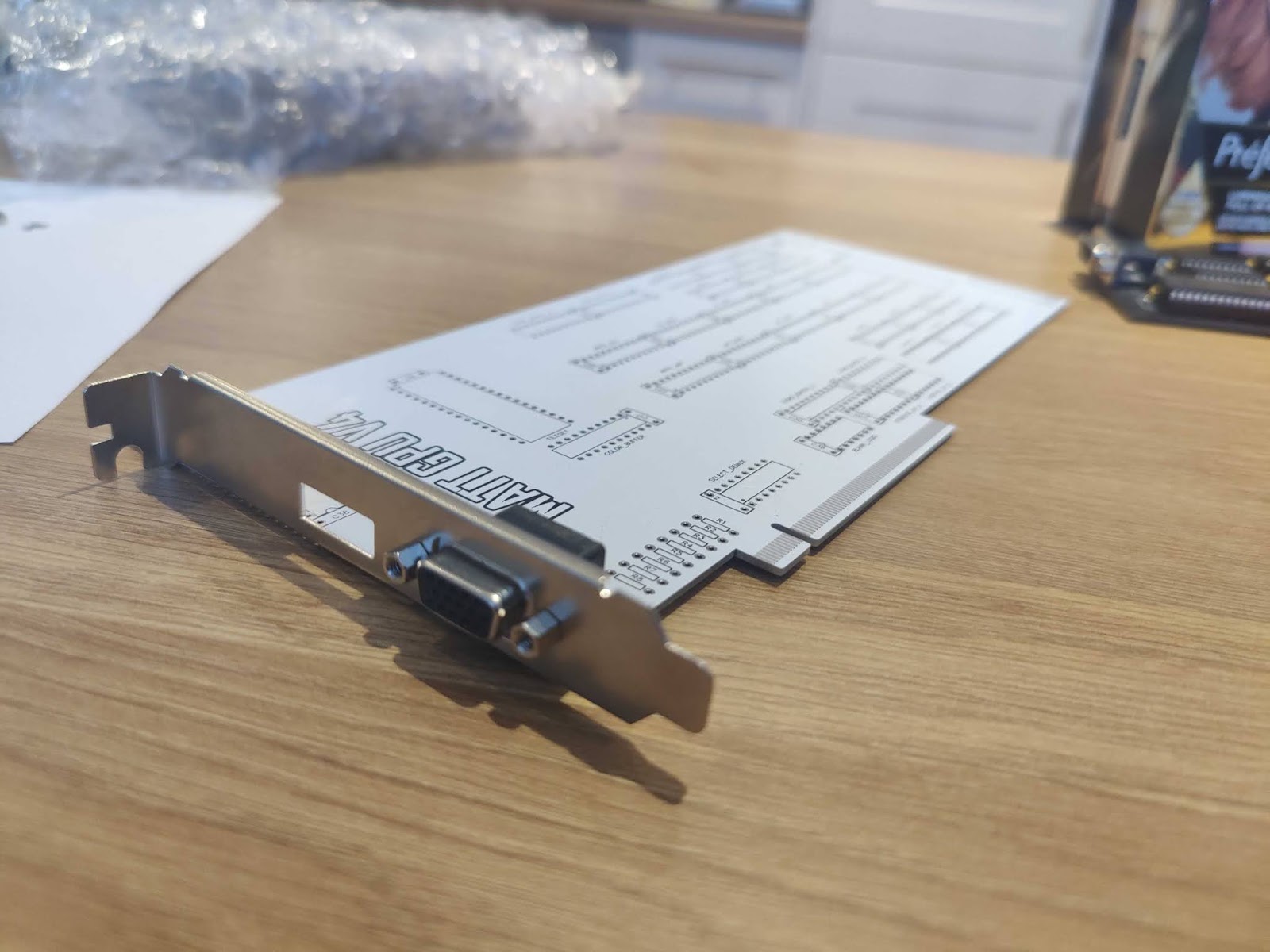 The final design
Hardware scrolling, a multiplexed five-line control interface, an EPROM-driven counter and a PCB in the shape of a PCI-E card.
The final design
Hardware scrolling, a multiplexed five-line control interface, an EPROM-driven counter and a PCB in the shape of a PCI-E card.
-
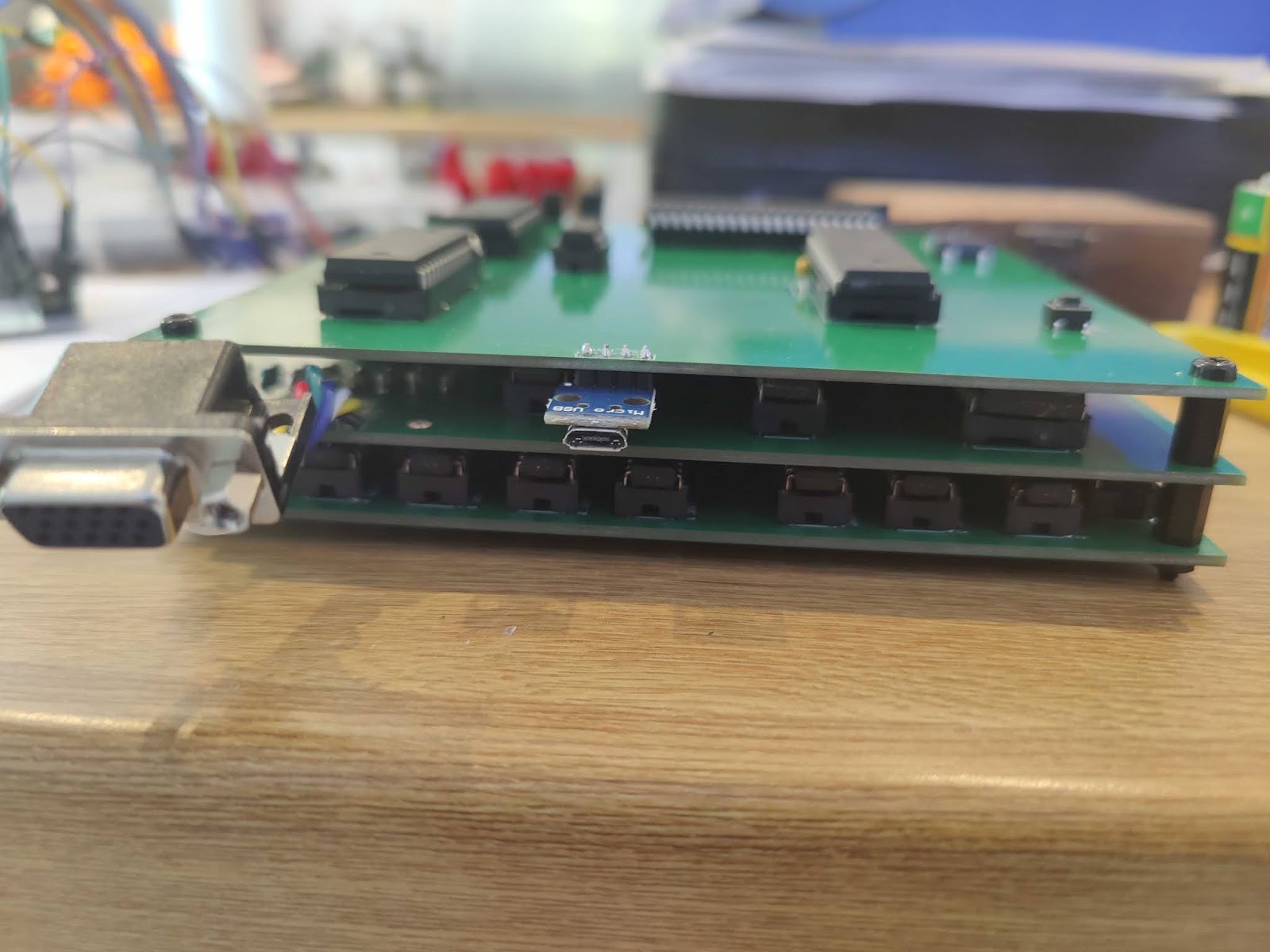 Connecting it to a 6502
Splitting the GPU into a three-board stack with Ben Eater's 6502 computer on top, first demos in 6502 assembly, and an emulator for both.
Connecting it to a 6502
Splitting the GPU into a three-board stack with Ben Eater's 6502 computer on top, first demos in 6502 assembly, and an emulator for both.
-
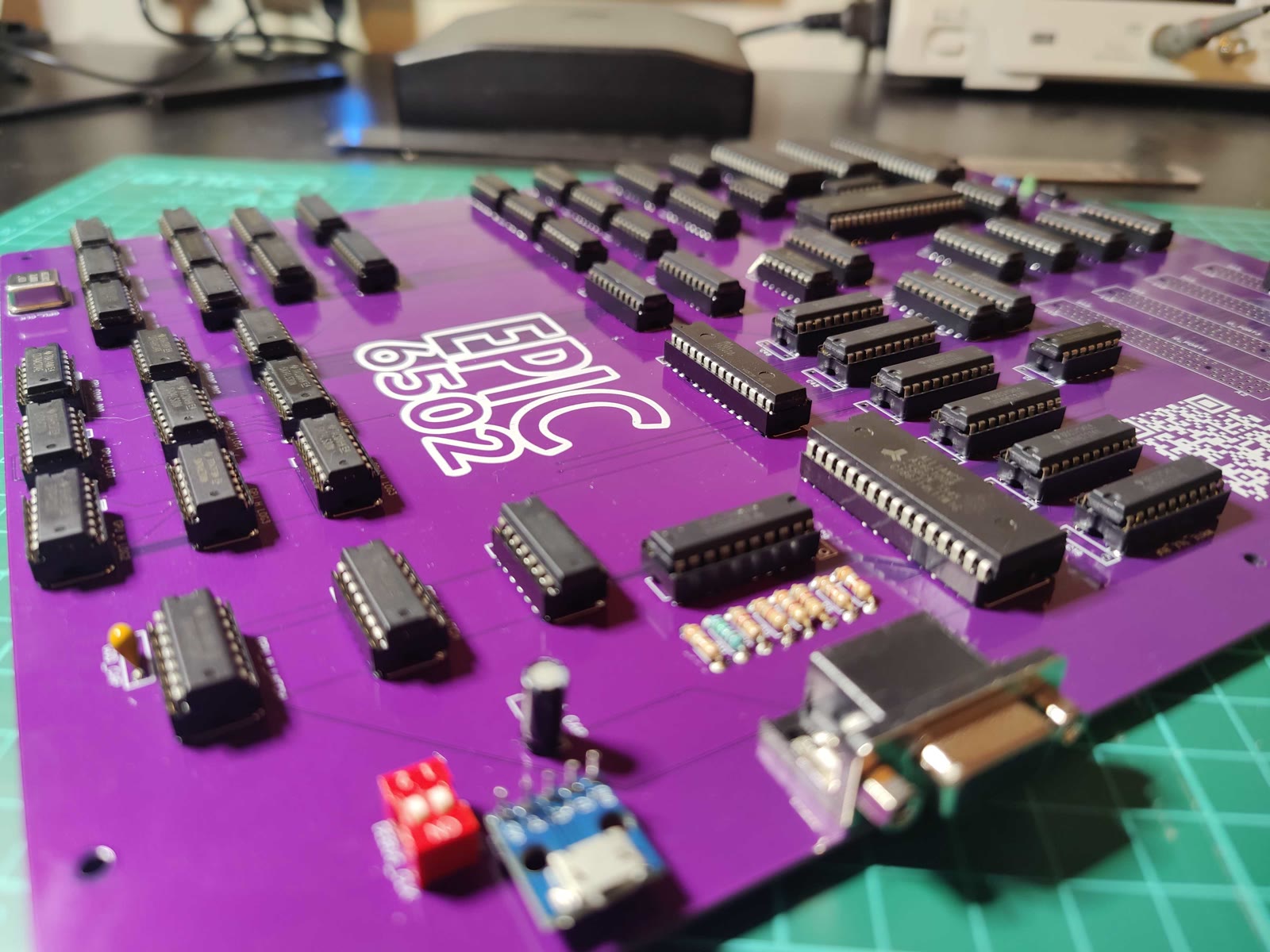 The EPIC 6502
Everything on one big purple board: the computer, the GPU and four expansion ports, plus swappable cartridges and Enhanced BASIC drawn in tiles.
The EPIC 6502
Everything on one big purple board: the computer, the GPU and four expansion ports, plus swappable cartridges and Enhanced BASIC drawn in tiles.
About the project
I'm a programmer by trade, and electronics is a hobby I'm teaching myself. After watching Ben Eater's “world's worst video card” series I set out to build my own: first on breadboards, then with higher resolution and better logic, and finally on custom PCBs.
Writing a Game Boy emulator over Christmas 2020 gave me the main idea: store the screen as tiles plus a map of which tile goes where, not one byte per pixel. A slow 8-bit CPU can drive that, and moving a viewport across a bigger map gives scrolling almost for free.
These pages are my original build logs, written as the work happened, with the original photos, diagrams and videos.